
How Children’s Books Are Printed: A Complete Guide from Concept to Finished Book
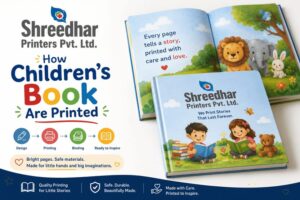
Children’s books are among the most visually engaging and creatively demanding publications in the printing industry. Unlike standard novels or textbooks, children’s books rely heavily on colourful illustrations, durable materials, high-quality paper, and attractive finishing techniques to capture young readers’ attention.
Whether you’re an author, publisher, educational institution, or self-publishing creator, understanding how children’s books are printed can help you make informed decisions about design, materials, and production.
At Shreedhar Printers , we specialize in Children’s Book Printing Services, helping clients transform creative ideas into beautifully printed books that inspire and educate young readers.
Why Children’s Book Printing Requires Special Attention
Children’s books are designed to be interactive, visually appealing, and durable. Since young readers often handle books frequently, the printing process must focus on both aesthetics and longevity.
Key considerations include:
- Vibrant colour reproduction
- Safe and durable materials
- High-quality illustrations
- Child-friendly finishes
- Strong binding options
- Premium paper selection
The right combination of printing techniques and materials ensures the book remains attractive even after repeated use.
Step 1: Designing the Children’s Book
Every child’s book begins with a carefully planned design. Authors and illustrators work together to create engaging layouts that balance text and illustrations.
During this stage, publishers determine:
- Book size and format
- Number of pages
- Illustration placement
- Typography and font size
- Cover design
- Print specifications
A well-designed book improves readability and enhances the learning experience for children.
For projects involving large print quantities, professional Custom Book Printing Services can help optimize the design for efficient production.
Step 2: Preparing Print-Ready Files
Before printing begins, the book files undergo prepress preparation.
This process includes:
- Colour correction
- Image optimization
- Resolution checks
- Bleed and margin setup
- Proof approval
Since children’s books often contain detailed illustrations, high-resolution artwork is essential to achieve sharp and vibrant printing results.
Professional printers use advanced prepress technology to ensure every page reproduces accurately during production.
Step 3: Choosing the Right Paper
Paper selection plays a crucial role in the quality and durability of children’s books.
The most used paper types include:
Art Paper
Art paper is widely used for illustrated children’s books because it delivers exceptional colour reproduction and image clarity.
Benefits include:
- Bright and vivid colours
- Smooth finish
- Enhanced illustration quality
- Durable surface
For a detailed paper type analysis, you can visit Art Paper For Children’s Book
Step 4: Printing the Interior Pages
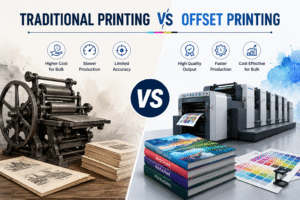
Most children’s books are produced using Offset Printing Services because of the superior colour consistency and cost efficiency it offers for medium and large print runs.
Offset printing provides:
- Accurate colour matching
- High-quality image reproduction
- Consistent printing across thousands of copies
- Cost-effective bulk production
Since children’s books depend heavily on illustrations, offset printing remains the preferred method for publishers worldwide.
Step 5: Printing the Cover
The cover is often the first thing a child notices.
To make children’s books visually appealing, printers use:
- Full-colour printing
- Gloss lamination
- Matte lamination
- UV coating
- Spot UV effects
A professionally printed cover not only attracts attention but also protects the book from everyday wear and tear.
Step 6: Binding the Book
Binding is one of the most important stages in children’s book production.
The choice depends on the book’s purpose, page count, and target age group.
Saddle Stitch Binding
Ideal for:
- Activity books
- Colouring books
- Short storybooks
Perfect Binding
Ideal for:
- Educational books
- Story collections
- Learning materials
Hardcover Binding
Ideal for:
- Premium picture books
- Gift editions
- Library books
Hardcover books offer maximum durability and are especially suitable for books intended for repeated use.
Step 7: Quality Inspection
Before books are packed and shipped, each production batch undergoes strict quality control checks.
Printers inspect:
- Colour consistency
- Page alignment
- Binding strength
- Cover finishing
- Print defects
Quality assurance ensures every book meets professional publishing standards.
Step 8: Packaging and Distribution
After printing and binding are completed, books are packaged carefully to prevent damage during transportation.
Publishers often require:
- Domestic distribution
- International shipping
- Export packaging
- Bulk delivery solutions
For overseas publishing projects, professional Book Printing and Publishing Services help ensure smooth global delivery.
Why Choose Shreedhar Printers for Children’s Book Printing?
Shreedhar Printers Pvt. Ltd. has extensive experience printing high-quality children’s books for publishers, educational institutions, authors, and organizations worldwide.
Our capabilities include:
- Children’s book printing
- Picture book printing
- Educational book printing
- Hardcover book production
- Offset printing services
- Export book printing
- Custom publishing solutions